Wetlands

River and Wetland Restoration for Flood Control in Bogotá, Colombia

Investments in the Bogotá River show how combining nature-based and grey infrastructure can reduce floods, restore ecosystems, and improve quality of life for nearly six million residents. 
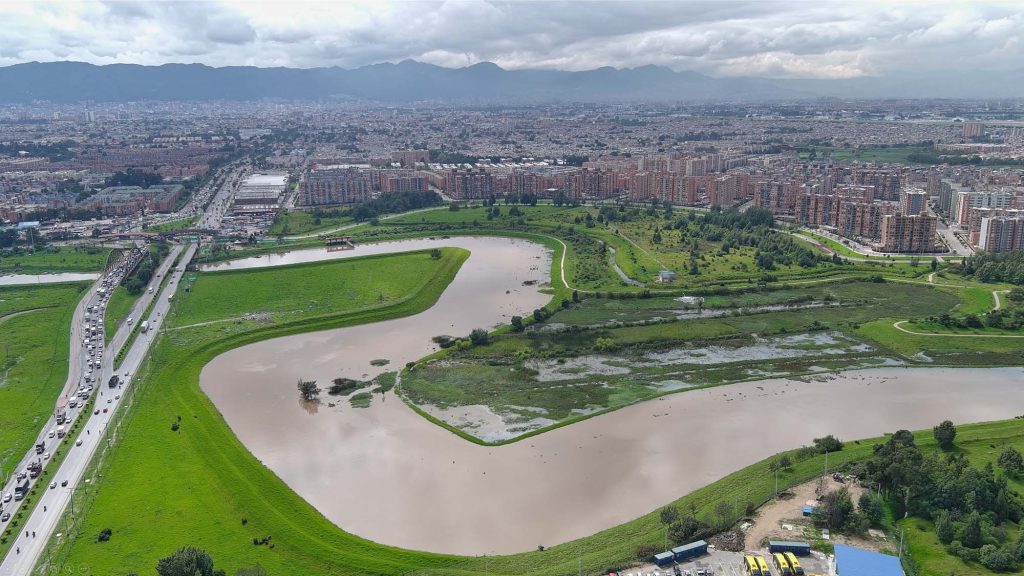
Bogotá River Basin at sunset in a rural area in Bosa; south of Bogotá – Colombia

Bogotá River Basin at sunset in a rural area in Bosa; south of Bogotá – Colombia

Project details

The Bogotá River basin covers more than 6,000 square kilometres, flowing through 46 municipalities in Cundinamarca and the city of Bogotá. It is vital for drinking water, agriculture, livestock farming, and electricity generation. Yet decades of untreated wastewater, rapid urban growth, and wetland degradation left the river heavily polluted, threatening biodiversity and human health. By 2010, only 27.5% of Colombia’s wastewater was treated, and the middle basin faced rising flood risks due to environmental decline and urban sprawl.  

Backed by financing from the World Bank and the Corporación Autónoma Regional de Cundinamarca (CAR), the Bogotá River Environmental Recuperation and Flood Control Project delivered a set of interventions in the middle basin, including: 

  • Upgrading the Salitre wastewater treatment plant to expand capacity and improve water quality. 
  • Relocating dikes to give the river more space and reduce flood risks. 
  • Restoring wetlands and creating 165 hectares of multifunctional areas that combine ecological restoration with recreational spaces. 

These interventions directly affect almost six million people living in Bogotá and neighbouring municipalities, who benefit from reduced flood risks, cleaner water, healthier ecosystems, and new recreational opportunities. 

The NBI Centre’s assessment will quantify the added value of these interventions. By comparing scenarios, it will explore how NBI contributes to flood protection, biodiversity conservation, improved water quality, and recreation — while reducing reliance on costly grey infrastructure. The results will help inform future investment decisions by the World Bank, CAR, and other regional authorities, and provide lessons for scaling up NBI in the upstream areas of the Bogotá River and beyond.