

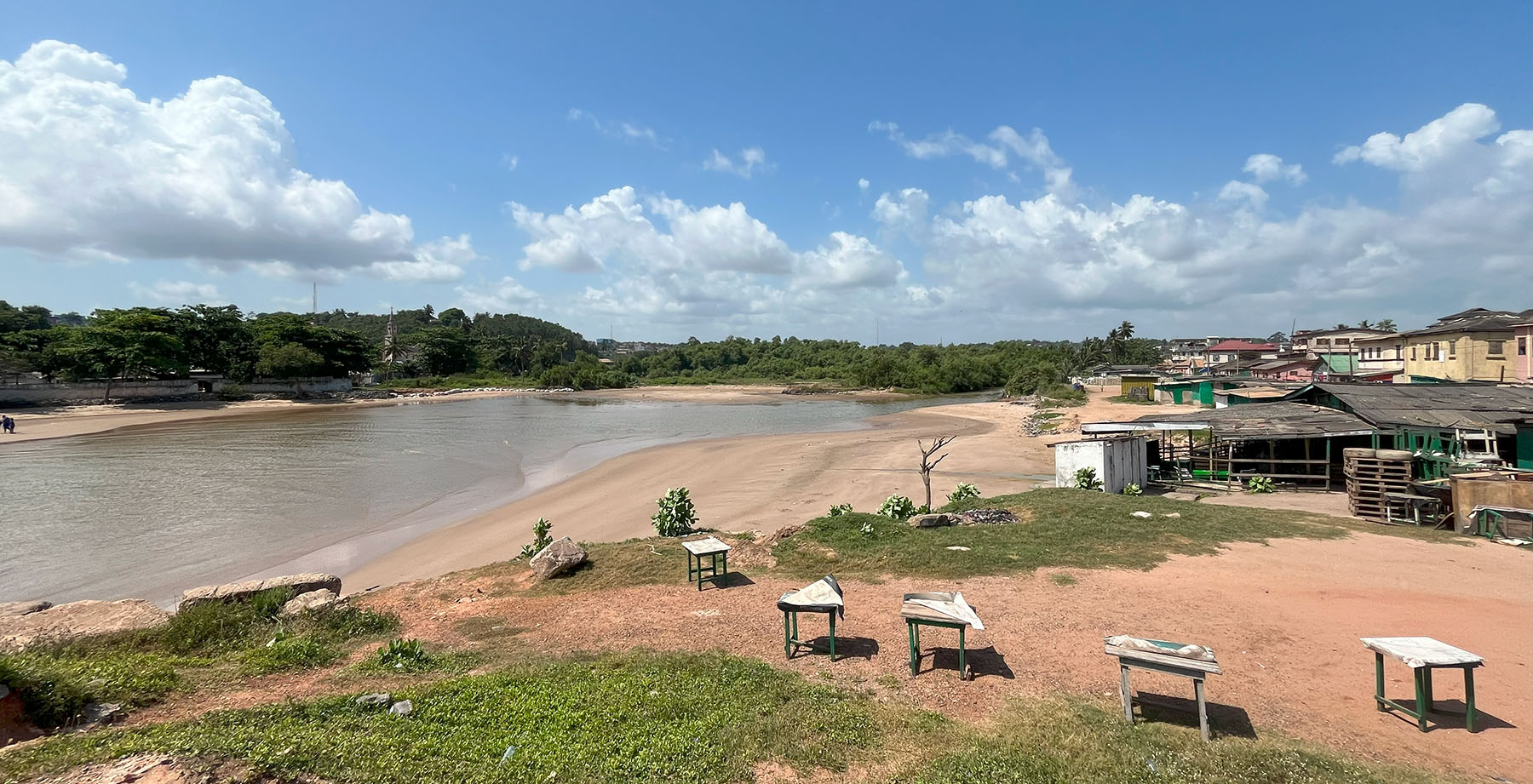
As flood risks rise across West Africa’s cities, public budgets are struggling to keep up. In Ghana’s Sekondi-Takoradi, a new economic valuation shows how investing in nature through restored wetlands and green spaces can deliver measurable returns for resilience.
Avoided flood damage and reduced maintenance costs
The valuation compared a business-as-usual scenario to a hybrid infrastructure scenario, accounting for both direct and indirect effects using spatial modelling, cost-benefit analysis, and climate projections to calculate the full social, environmental, and economic impacts of the interventions over 26 years.
Results show that for every dollar invested, Sekondi-Takoradi could generate between USD 3.26 and 13.53 in returns, depending on the flood economic valuation method. The largest share of benefits comes from avoided flood damage, estimated at USD 747 million under the high-valuation scenario. In addition, reduced infrastructure maintenance costs, thanks to less frequent and less severe flood damage, add another USD 19 million in savings.
The hybrid scenario also delivers the following broader economic and environmental outcomes:
- 76.85% internal rate of return, far exceeding typical public investment thresholds and demonstrating substantial value for money;
- increased water retention and reduced flood damage, lowering recovery costs and improving climate resilience;
- greater carbon sequestration, contributing to national mitigation goals and long-term climate targets;
- improved air quality and health outcomes through enhanced green cover and reduced pollution;
- increased land and property values, especially in flood-protected zones, boosting local tax revenues and private sector interest; and
- local job creation and skills development through the construction and maintenance of nature-based and grey infrastructure systems.
How to compare green and grey on equal terms
The results indicate that NBI can compete economically with grey alternatives—if evaluated using appropriate tools that consider the economic value of externalities. For Sekondi-Takoradi, this insight helps prioritize projects and refine funding proposals.
“We know that NBI can protect our communities, and with this report, we now have concrete data to guide our decisions and make a stronger case to investors that it is not only effective but also cost-efficient,” says Hon. Fredrick Faustinus Faidoo, Mayor of Sekondi-Takoradi.
But the implications go further. Many West African cities face similar challenges, including how to build climate-resilient infrastructure without overextending limited budgets. This assessment provides a replicable method to assess the full value of hybrid solutions, making it possible to weigh nature-based and grey infrastructure options on equal footing.
By capturing both avoided costs and broader societal outcomes, system-based valuation equips planners with the tools they need to justify long-term, resilience-focused investments.
Moving forward
This case highlights a broader need for decision-makers to look beyond upfront costs and consider the long-term value of interventions, especially those that reduce future risks. Recommendations include the following:
- Municipal governments should incorporate full-system valuation into planning processes to identify investments with the highest long-term value.
- National climate and infrastructure strategies should formally recognize hybrid infrastructure approaches for urban resilience and include guidelines for assessing their economic case.
- Funders and development partners should support or require valuations that account for avoided losses, ecosystem services, and long-term benefits.
The cost of inaction is already measurable. What’s needed now is for governments, funders, and project planners to make nature-based and hybrid infrastructure the default, not the exception.
Read the full report on Sekondi-Takoradi’s hybrid infrastructure valuation here.


